
The Old Pull — Why People Still Want a Piece of Ground
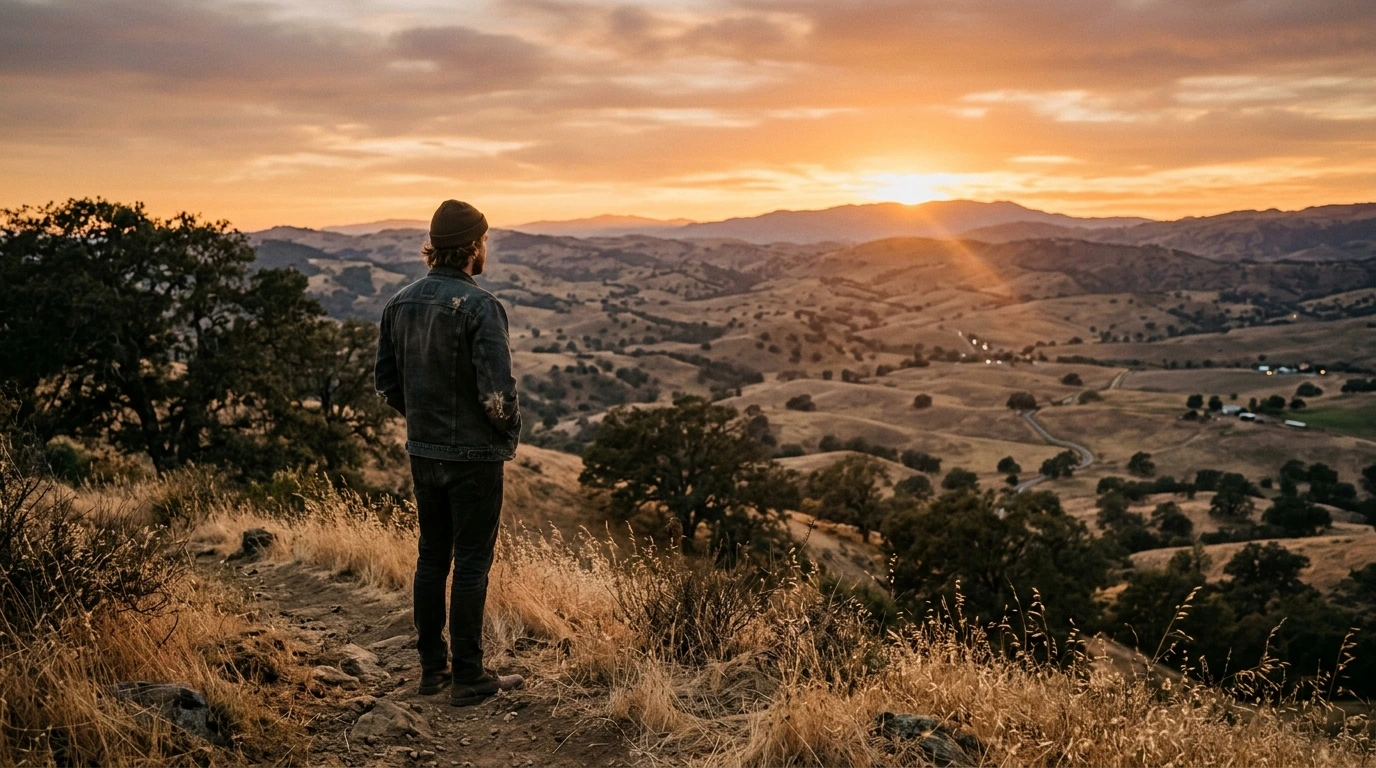
There is something embarrassingly ancient about wanting to own land. Not embarrassing because it's shameful — just because it bypasses argument. The want comes up from somewhere below the level of spreadsheets and mortgage calculators, from a place in the human animal that doesn't care much about your opinions on the matter. You drive out past the last gas station, past the last subdivision with its identical cream-colored fences, and you come to a stretch of open ground — oak trees maybe, or high desert scrub, or just a quiet hillside going gold in October — and something in the chest relaxes that you didn't know was clenched. That's the thing. That's what we're talking about.
People will tell you they're buying land for the investment. Fine. They'll tell you it's about building someday, or retiring someday, or getting out of the city someday. All true. But beneath those respectable rationales lives a simpler and more animal hunger: the desire to have a place that's yours, that stays put, that won't be turned into a parking structure while you're not watching.
Research confirms what the bones already know. Studies published by the American Psychological Association have found that spending time in nature is consistently linked to reduced stress, improved mood, and measurable gains in cognitive function — better memory, more mental flexibility, less of the grinding attentional fatigue that city life produces with such cheerful efficiency. None of this surprises anyone who has sat alone on their own land at dusk listening to absolutely nothing in particular. The surprise would be if the opposite were true.
There is also the matter of identity. Owning a piece of earth — even a modest parcel you visit on weekends, even acreage you haven't built on yet — shifts something in a person's sense of self. Psychologists who study this describe it in terms of stewardship, the pride and purposefulness that come from tending something larger than yourself. Which sounds, perhaps, a little earnest. But stand on ground that is yours and watch a hawk work the thermals above it, and the earnestness becomes exactly the right word.
The dream of land is older than California, older than America, older than the notion of deed and title. Some historic nations have understood it differently — as relationship rather than ownership — and there's wisdom in that framing worth carrying forward. What most land buyers are reaching for isn't dominion. It's belonging. The desire to be tethered to something real in a world that has become aggressively, relentlessly virtual.
That's the old pull. It doesn't need a market report to justify itself. It just needs a dirt road and the willingness to follow it to the end.